

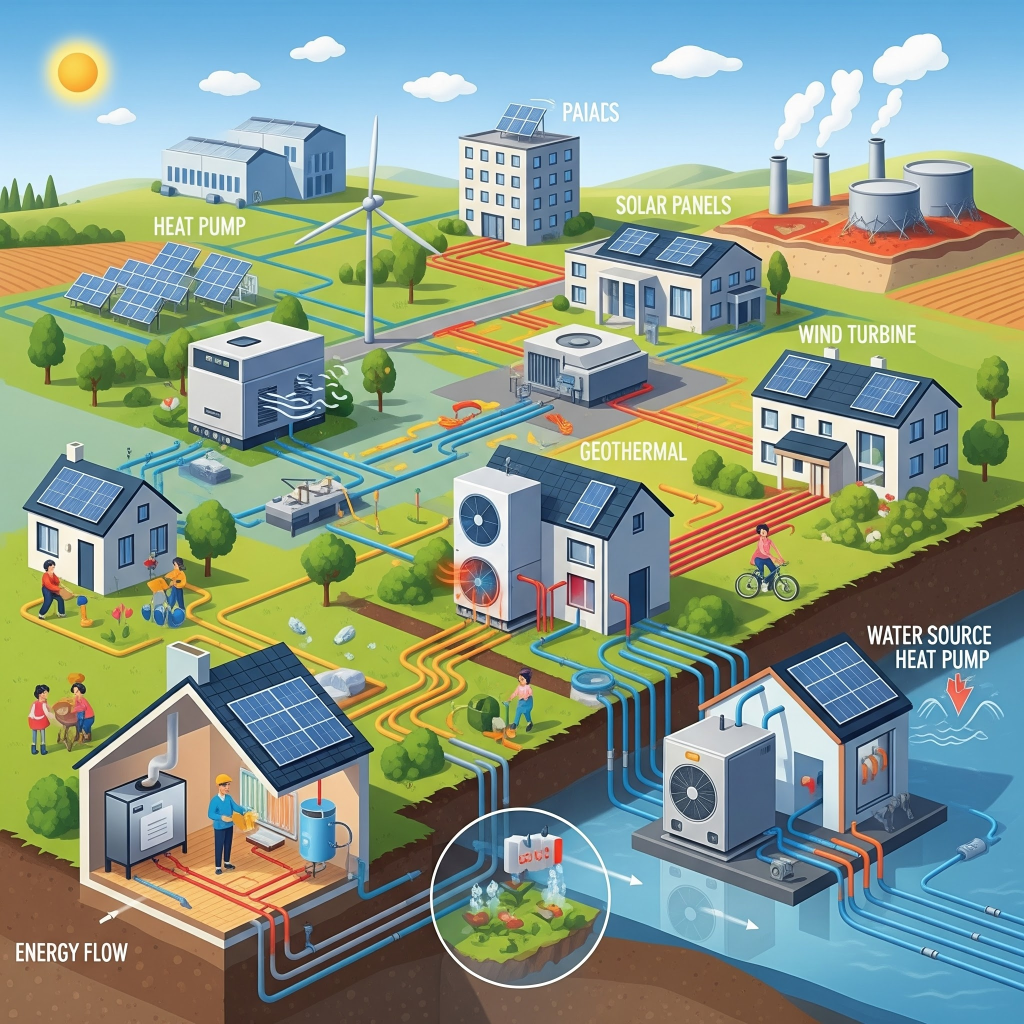
A new website dedicated to the delivery of the Low Carbon Heating Apprenticeship Standard is live. Our partners and professional bodies constantly add to it. They help in the curriculum development.
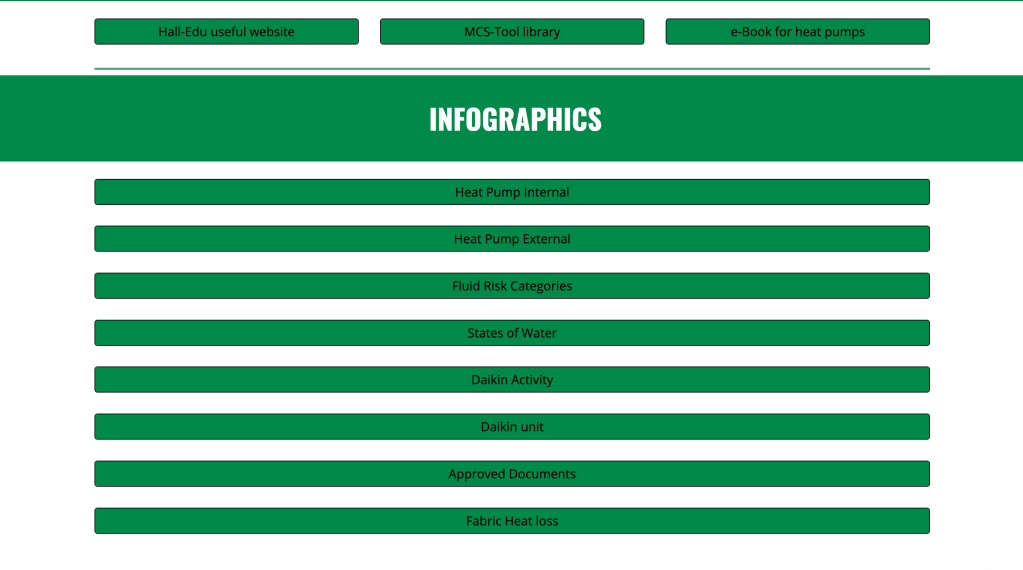
This website, “Low Carbon Heating HallEdu,” provides various resources. These resources support the Year Two content of the Low Carbon Heating Technician apprenticeship standard. It includes links to external websites like Hall-Edu, MCS-Tool library, and an e-Book for heat pumps. The site also features infographics on topics like Heat Pump Internal and External components. It also covers Fluid Risk Categories, States of Water, Daikin Activity and unit, Approved Documents, and Fabric Heat loss.

This webpage, “Low Carbon Heating HallEdu – Check your learning,” provides various quizzes to test knowledge on low carbon heating. It includes five general quizzes and a specific quiz on “Heat pump tech.” The page also offers navigation to other sections of the “Low Carbon Heating HallEdu” site.
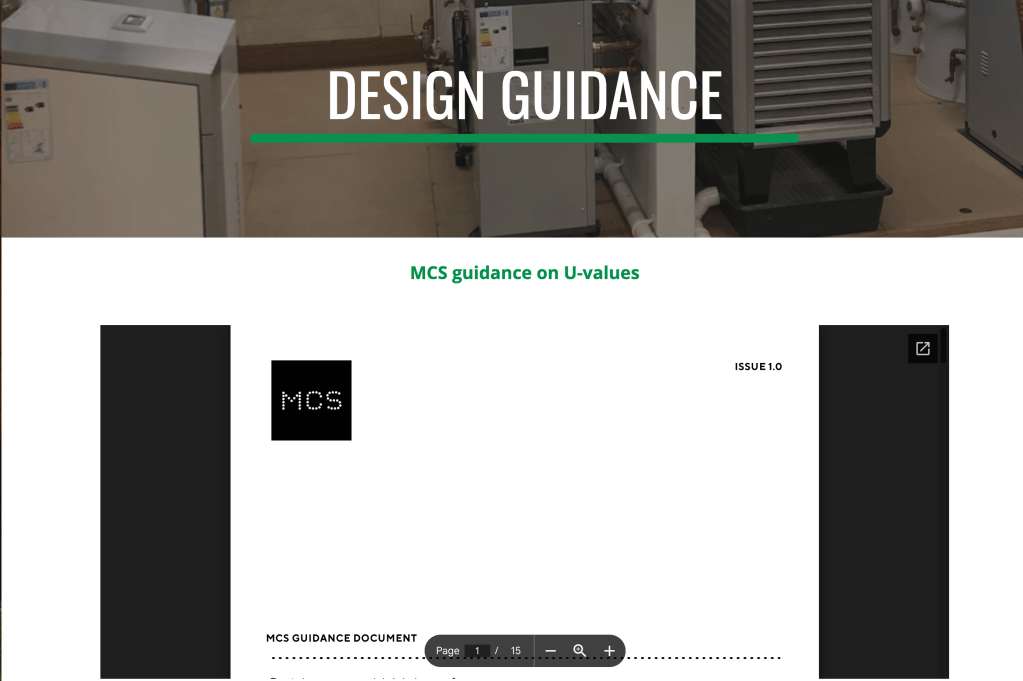
This webpage, titled “Design guidance” within the “Low Carbon Heating HallEdu” site, provides resources related to low carbon heating design. It offers specific guidance on MCS (Microgeneration Certification Scheme) U-values. These values are crucial for understanding heat loss in buildings. It also includes a downloadable PDF document on this topic. Additionally, the page addresses low-temperature design. This is another important aspect of efficient low carbon heating systems. A linked PDF provides further information. The page also features several images, illustrating concepts or examples related to the design guidance.
This webpage, “Electrical,” on the “Low Carbon Heating HallEdu” site, explains the electrical components of heat pump systems. These include the compressor, fans, circuit boards, and emergency heat. It highlights that the compressor is the primary electricity consumer. The page also details essential electrical requirements for installation. These include a dedicated high-voltage circuit and sufficient home electrical supply. Correct wiring size and specific RCD protection (Type F or B) are also needed. Additionally, it distinguishes between high-voltage wiring for power and low-voltage control wiring for communication within the system.
This webpage is titled “Glossary of terms” on the “Low Carbon Heating HallEdu” site. It defines common terms used in the low carbon heating industry. It also provides a link to “Environmental notes” in PDF format. Additionally, it offers navigation to other sections of the website. These sections include “2924 Qualification,” “Design guidance,” “Electrical,” “Servicing heat pumps,” “Solar,” and various “Year” groups.
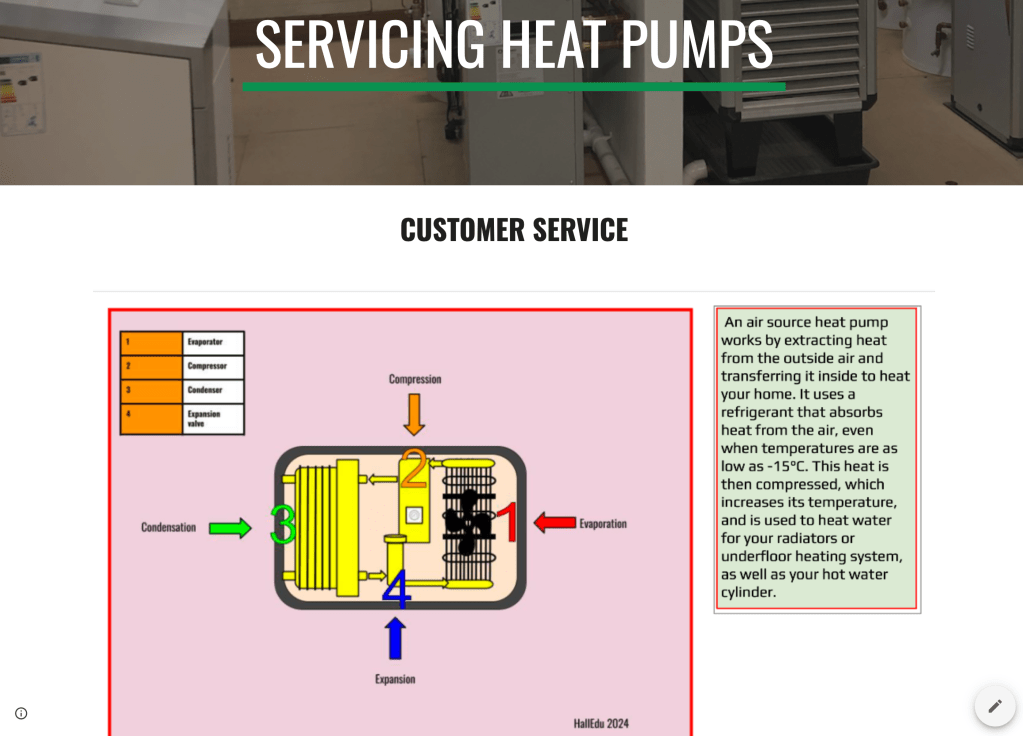
This webpage, “Servicing heat pumps” on the “Low Carbon Heating HallEdu” site, offers resources for maintaining heat pump systems. It provides downloadable checklists for servicing Air Source Heat Pumps (ASHP) and Ground Source Heat Pumps. There is a general ASHP service sheet. Additionally, it includes a “customer service” section.
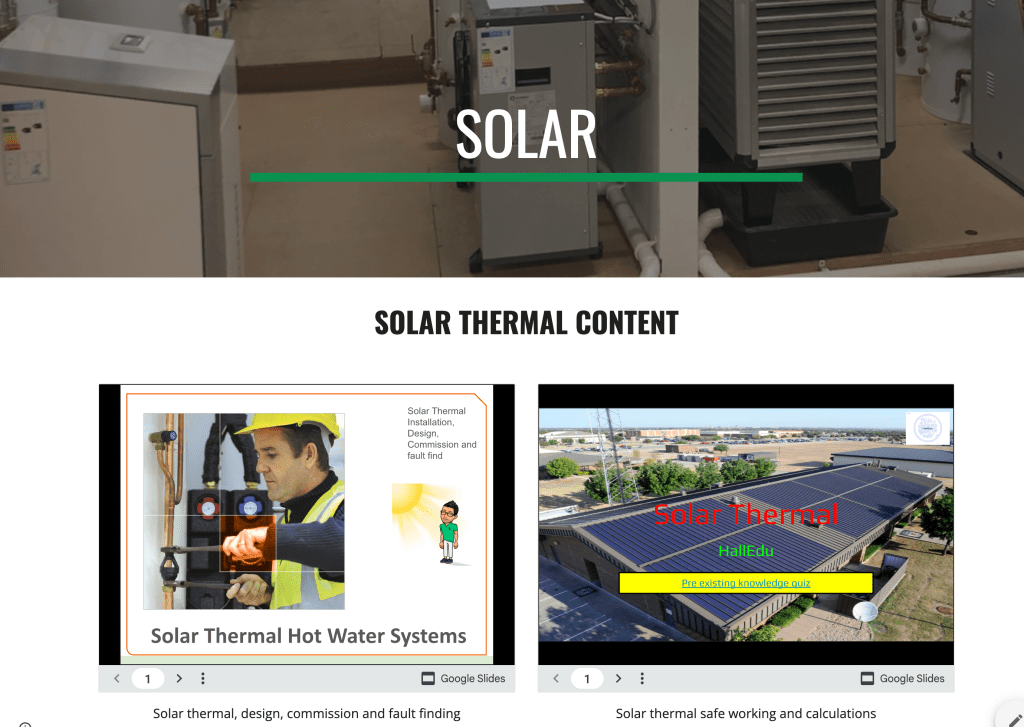
This webpage, “Solar,” on the “Low Carbon Heating HallEdu” site, offers resources for solar thermal systems. It covers design, commissioning, fault finding, safe working practices, and calculations. The page includes images of basic layouts, components like flat plate collectors and evacuated tubes, and a solar pumping station. It also provides tools such as a solar thermal calculator and an online T-Sol calculator for design and analysis.
This webpage, “Unvented Hot Water” on the “Low Carbon Heating HallEdu” site, provides comprehensive information on the installation of unvented hot water systems. It offers detailed insights into the installation process. It also covers commissioning and servicing. It covers both direct and indirect installations, detailing the components of inlet control groups and individual valve setups. The page also offers guidance on discharge pipework requirements (D1 & D2) as per the G3 Approved Document. A practical example for calculating pipe sizes is included. Additionally, it outlines the commissioning process, emphasizing manufacturer instructions, proper filling, recommended storage temperatures, and the recording of technical data. Troubleshooting and a reference to a Hot Water Association service guide are also included.
This webpage, “Year one LCHT,” is a comprehensive resource for the first year of a Low Carbon Heating (LCHT) program. It provides a “year one practical training pack” in PDF format. The content is organized into three main sections: “safe working practices,” “processes,” and “scientific.”
- Safe Working Practices: Covers essential safety topics such as accidents and emergencies, confined spaces, COSHH, electrical safety, fire prevention, first aid, ladders, legislation, manual handling, PPE, risk assessment, waste management, and Z-Loler.
- Processes: Details practical skills like using hand and power tools, understanding materials and fittings, various jointing and welding techniques (including fusion welding), bending, preparation, clipping, and installation procedures.
- Scientific: Delves into fundamental scientific concepts relevant to the field, including units of measurement, simple machines, relative densities, properties of materials, gases, and liquids, corrosion of materials, and basic mechanics.
The page also includes slide decks providing an “Overview of technologies.” There is a detailed “ASHP and Heat pump Delivery” section that covers design and operation. It also addresses components, energy sources, and heat loss. Additionally, it includes safety, standards, ERP, and types of heat pumps. There are details on system components, sizing, site location, electrical aspects, maintenance, and installation considerations.
This webpage is titled “Year two LCHT.” It is on the “Low Carbon Heating HallEdu” site. It serves as a resource for the second year of the Low Carbon Heating program. It includes practical guidance, information on low-temperature design, F-gas documentation and qualifications, and Daikin manufacturer training materials. The page also provides resources on national occupational standards for heat pumps. It offers solar documentation and details on planning and supervision for these systems. A notable section discusses the impact of wind on solar thermal performance in the UK. It highlights the effect on efficiency. The section emphasizes the importance of correct installation to prevent damage.
This webpage, “Year three LCHT,” is on the “Low Carbon Heating HallEdu” site. It provides resources for the third year of the Low Carbon Heating program. It includes information on planning and supervision, with a focus on project management and health and safety. The page includes the installation of heat pumps, solar thermal, and unvented hot water systems. It focuses on emphasizing best practices. Regulatory compliance is also highlighted. Additionally, it provides details on fault diagnosis and rectification for these systems. It also provides information on environmental technology. Lastly, it includes low carbon heating solutions.


Leave a Reply